

Megan Callahan, Skincare Editor.
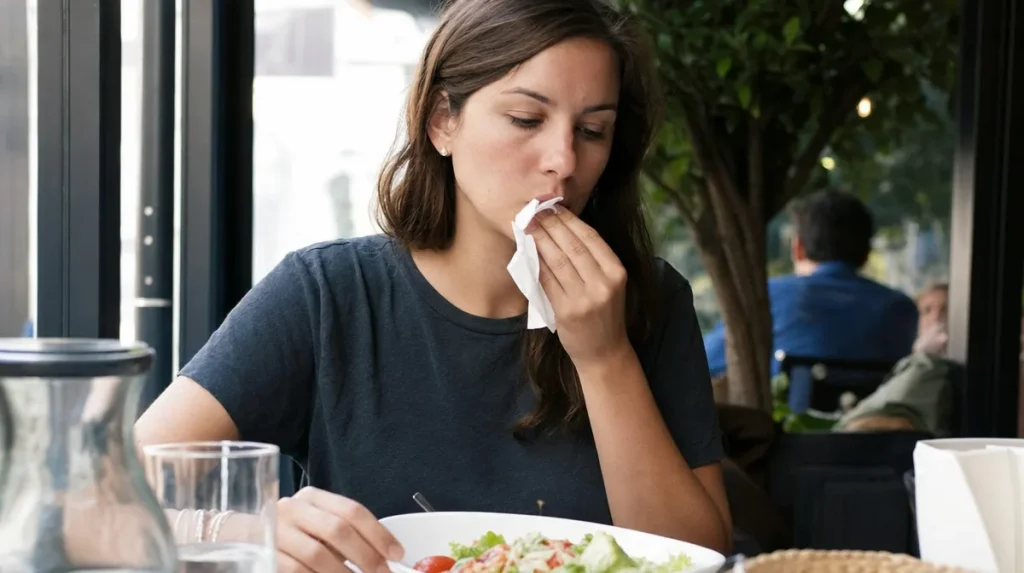
You reapply at 10 a.m., again after coffee, and by the time you’re walking out of the lunch meeting your lipstick has migrated to the rim of a water glass and a faint ring around your mouth. The tube promised twelve hours. You got two. If that sounds familiar, the problem usually isn’t the lipstick itself, it’s everything you do or don’t do around it. A 2021 study in the International Journal of Cosmetic Science found that lip surface texture and hydration level, not formula alone, were the strongest predictors of how long a long-wear pigment stayed put. In other words, the product is maybe half the equation. This guide walks through the other half: prepping the canvas, applying in a way that actually locks pigment in place, and knowing when to touch up instead of starting over.
- Prep matters more than the formula label: flaky or overhydrated lips break down long-wear pigment faster than any ingredient list can compensate for.
- Thin layers beat one thick coat: long-wear formulas set through evaporation, and a thick layer traps moisture underneath, causing it to crack or slide.
- Blotting at the right moment, not skipping it, is what makes wear time real: a single blot after the first layer removes excess product before it can transfer.
Why Lips Are The Hardest Surface To Make Anything Stick To
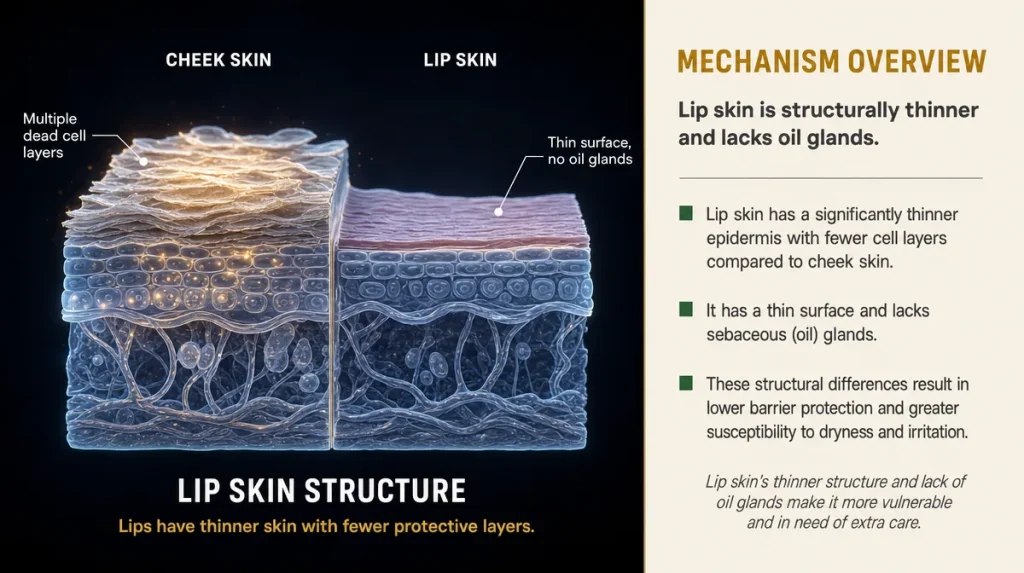
Skin on the rest of your face has a stratum corneum, dozens of layers of dead cells that slow down moisture loss and give makeup something stable to grip. Lips have a much thinner layer, sometimes only three to five cells deep, and no oil glands of their own. That’s why they dry out faster and why pigment that would sit calmly on a cheek can crack or bleed on a lip line within an hour.
Think of the difference between painting a wall that’s been primed and one that’s still raw drywall. Raw drywall soaks up paint unevenly, some patches go matte and chalky, others stay wet and streak when you touch them. Bare, dry lips do the same thing to pigment.
A 2019 review in the Journal of Investigative Dermatology on lip barrier physiology noted that transepidermal water loss on the lips can run several times higher than on nearby facial skin, which is part of why lip products behave so differently from face products marketed with similar wear-time claims.
Prepping The Canvas Before Any Color Goes On
Skip the exfoliation step and even the best long-wear formula will grab onto dry patches unevenly, then crack along those same lines within a few hours. The fix is not complicated: a damp washcloth, gentle circular motion, thirty seconds, once or twice a week. Daily scrubbing does more harm than good, since it can strip the thin protective layer that’s already fragile.
After exfoliating, a thin layer of balm helps, but timing is everything. Apply balm, wait two to three minutes, then blot off any shine with a tissue. Applying pigment directly onto a wet, balmy surface is one of the most common mistakes, since the moisture prevents the formula from setting and it slides around instead of locking in.
The American Academy of Dermatology’s public guidance on lip care recommends fragrance-free balms with occlusive ingredients like petrolatum for dry or chapped lips, which is a reasonable baseline for anyone prepping under long-wear color.
Finding The Line: Liner As A Foundation, Not Just An Edge
Most people think of lip liner as a way to sharpen the edge of the mouth. Its more useful job with long-wear formulas is as a base coat. A liner in a shade close to the lipstick, applied across the entire lip rather than just the border, gives the pigment something slightly tackier to cling to, similar to how a coat of primer helps paint adhere to a slick surface.
The mistake to avoid is picking a liner far darker or far more matte than the lipstick itself. That mismatch becomes obvious as the color wears down unevenly over hours, leaving a ring that reads as sloppy rather than intentional.
A quick self-test: after lining, run a finger lightly across your bottom lip. If color transfers heavily onto your finger, the liner is too fresh or too soft, and it needs another thirty seconds to set before lipstick goes on top.
Applying In Thin Layers, Not One Heavy Coat
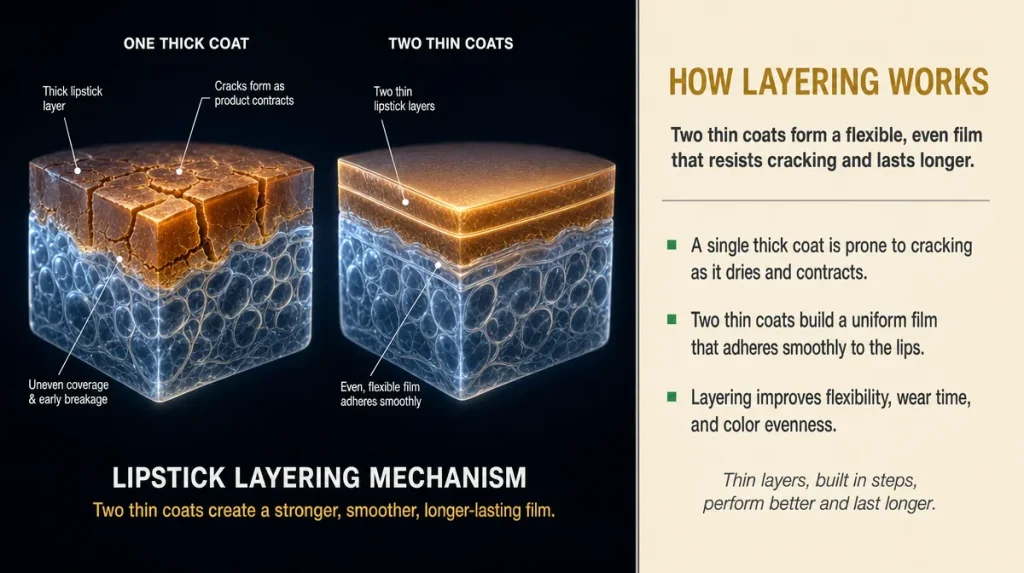
Long-wear liquid lipsticks generally set through evaporation: solvents in the formula dry down, leaving pigment and film-forming polymers behind. A thick single coat traps solvent underneath the surface, so the top dries while the layer beneath stays wet, which is exactly why these formulas sometimes crack or peel later in the day.
Two thin coats, each given sixty to ninety seconds to dry before the next, almost always outperform one thick coat. It feels slower in the moment, but the wear time difference is significant, according to formulation research cited in a 2020 Journal of Cosmetic Science paper on film-forming lip polymers, which found multi-layer application improved transfer resistance meaningfully compared with single-layer application.
A napkin blot between coats, pressing lightly rather than dragging, removes excess pigment that hasn’t bonded to the lip surface and reduces the amount that can transfer onto a coffee cup or a mask.
The Blot-and-set Step People Skip
Blotting feels counterintuitive, since it seems like you’re removing the product you just applied. But a single blot after the first layer, using a folded tissue pressed flat against the lips for two seconds, takes off only the top layer of pigment that hasn’t bonded yet. What’s left behind sets harder and resists transfer better.
Setting powder is optional and mostly unnecessary with true long-wear formulas, since most already contain film-formers designed to do that job. Piling a translucent powder on top can actually make the color look dry and patchy rather than more durable.
A good gauge: if lipstick still transfers onto a glass after the blot-and-set step, the layer underneath likely wasn’t given enough drying time before the second coat went on.
Eating, Drinking, And The Myth Of The Total Transfer Barrier
No long-wear formula is truly transfer-proof, whatever the marketing language on the box implies. Oil from food, particularly anything fried or buttered, breaks down the film-forming polymers that keep pigment in place. A slice of pizza will do more damage in five minutes than four hours of talking.
The practical workaround: blot lips before eating anything oily, and use a straw for cold drinks when possible, since it reduces direct contact between liquid and the lip line. None of this is about vanity theater, it’s simple physics. Oil and water both interfere with the same film that’s holding the pigment down.
Drugstore long-wear formulas and higher-end ones behave similarly here. Price point has far less to do with oil resistance than the specific polymer blend used, which brands rarely disclose on packaging.
Reading Your Own Wear Pattern Instead Of Chasing A Number On The Box
Every mouth wears lipstick differently based on how much you talk, how dry your climate is, and how often your lips touch cups or fabric. Someone working from home in a humid August in Charleston will get very different results than someone commuting through a dry, heated office in a Chicago January.
Instead of trusting a universal claim like twelve-hour wear, track your own pattern for a week. Note where the color fades first, usually the center of the lower lip from talking and drinking, and touch up there specifically rather than reapplying the entire look. This targeted approach uses less product and looks more natural than a full reapplication.
Dry winter air with indoor heating is a common culprit for faster breakdown, since it pulls moisture from lips faster than summer humidity does. A slightly richer balm underneath during winter months, given time to absorb before color goes on, can meaningfully change how the same lipstick performs season to season.
What’s Marketing Language And What’s Actually Measurable
Terms like “12-hour wear” or “transfer-proof” are tested under controlled lab conditions that rarely resemble a full day of talking, eating, and drinking. That doesn’t make the claim false, it makes it a best-case scenario rather than a guarantee.
What’s worth paying attention to on a label: whether the formula lists film-forming ingredients, which genuinely relate to transfer resistance, versus vague phrases like “long-lasting formula” with no supporting ingredient detail. Good Housekeeping’s beauty lab testing has historically emphasized real-world wear tests over marketing copy alone, which is a reasonable model for how a shopper might evaluate her own results at home.
The honest answer is that no ingredient list guarantees performance on your particular lips. Climate, diet, and application technique change the outcome as much as the formula does.
Key Takeaways
Long-wear lipstick performance depends as much on lip prep and application technique as on the formula itself. Gentle weekly exfoliation, a thin balm layer blotted before color, and two thin coats instead of one thick one all extend wear meaningfully. Blotting after the first coat, tracking your own fade pattern, and touching up only where color actually wears thin will do more for your day than chasing a bigger number on the label.
A Simple Checklist To Keep By The Mirror
- Exfoliate gently once or twice a week, never daily
- Apply balm, wait two to three minutes, then blot off shine
- Line the whole lip, not just the edge, and let it set before color
- Apply in two thin coats, drying sixty to ninety seconds between
- Blot once after the first coat with a folded tissue
- Blot again before eating anything oily
- Track where your color fades first and touch up only there
- Adjust balm richness for the season, more in dry winter months
This article is for general information and does not replace personalized advice from a dermatologist or pharmacist.
Individual results vary based on skin type, climate, and application technique.