

Nora Whitfield, Staff Writer.
You are standing at the bathroom mirror with four minutes before you need to leave, and the mascara wand comes out clumped on one side, thin on the other. You have already bought the tube that promised triple volume. It sat on your lashes looking exactly like the one before it. The truth, backed by how these formulas actually behave on a lash, is that most disappointing mascara results come from technique, not the product itself. A wand held straight up and down does roughly half the work of one worked side to side at the base first. That single adjustment changes what the same tube can do before you have spent another dollar.
- Wiggle at the root, not the tip: side-to-side motion at the base of the lash deposits the coating where volume actually reads, before you ever pull upward.
- Thin coats beat one thick coat: two applications with 30 seconds of air-drying between them build density without the clumping a single heavy pass causes.
- Curl before product, never after: curling dry lashes and letting mascara set on top of the curl holds shape for hours longer than curling over wet mascara, which is what causes lashes to fall by noon.
Why Volume Mascara Underperforms For Most People
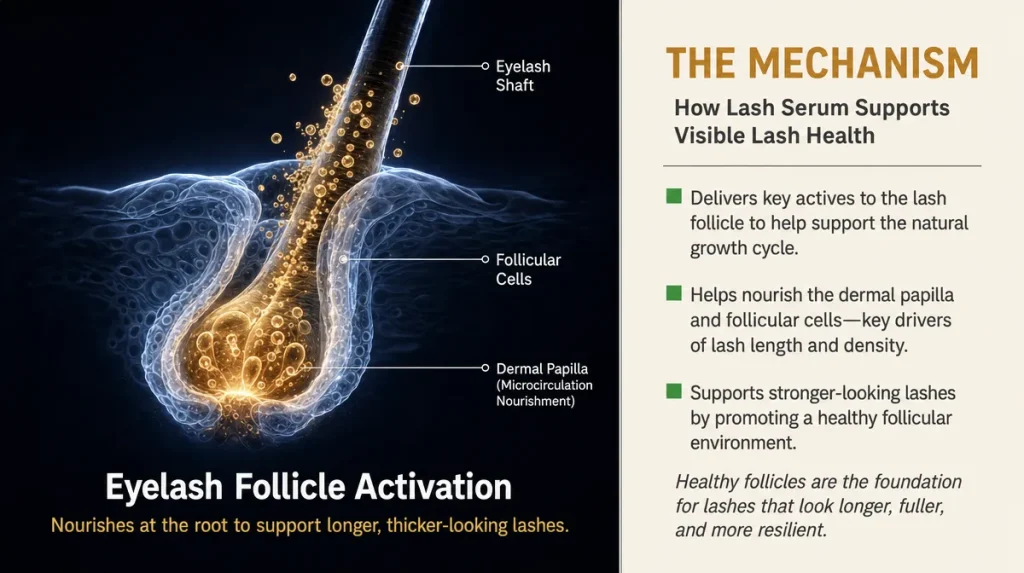
Volume mascara is built with a thicker wax and polymer load than lengthening formulas, which is exactly why it behaves badly when applied the way you would apply a thin lengthening tube. Think of it like frosting a cake. A thin glaze spreads evenly with one pass. A dense buttercream needs to be worked in layers or it clumps into ridges. Volumizing formula is the buttercream of mascara.
Most people apply it in one long stroke from root to tip, the way they learned as teenagers with a basic drugstore tube. That motion drags the thick product upward before it has coated the base of the lash, which is where visual density actually comes from. The result is a mascara that looks heavy at the tip and sparse at the root, the opposite of what volume is supposed to look like.
A 2019 study in the Journal of Cosmetic Science on mascara application patterns found that wand angle and stroke direction affected perceived lash thickness more than the polymer content of the formula itself, when comparing the same product applied two different ways. That is worth sitting with. The tube is not always the problem.
The Wiggle-and-lift Method, Step By Step
Start with a completely dry, clean lash line. Product applied over old mascara or lash serum residue will not distribute evenly, no matter how good the technique.
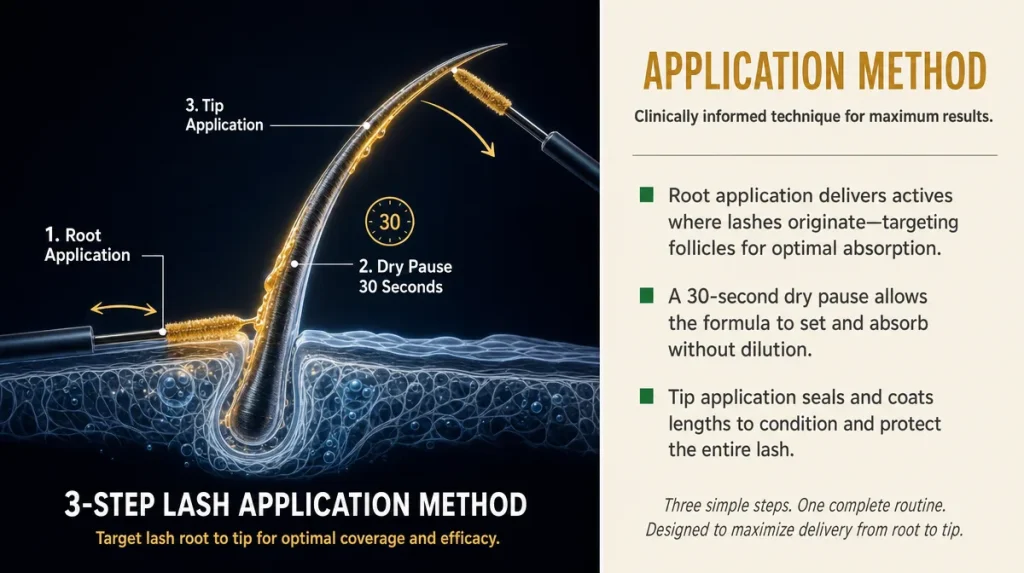
Place the wand at the very root of the top lashes, close to the lid, and wiggle it side to side for two or three seconds before moving anywhere. This is the step almost everyone skips. The wiggle deposits pigment and polymer into the gaps between lashes, which is what reads as density from a normal viewing distance.
Only after that base coat is worked in should you draw the wand upward and slightly outward toward the tips, using the tip of the brush rather than the belly for the last third of the lash. This keeps the ends from clumping into spider legs.
Let that first coat sit for 30 seconds. This matters more than most people think. Applying a second coat while the first is still wet just moves wet product around and thins it out. A dry first coat gives the second something to grip, which is how you build visible layers rather than a single muddy one.
Apply a second, lighter coat using the same root-first motion. Two thin coats, properly dried between, will almost always look fuller than one heavy coat, and they hold their shape longer through a humid afternoon.
Why Curling Order Changes Everything
Curling lashes after mascara is already on them is one of the most common habits that quietly ruins volume. Wet mascara has not set into its final shape yet, so squeezing a curler over it can bend lashes unevenly, and in some cases pulls a few out at the root.
The better order is to curl first, on completely bare or freshly cleaned lashes, holding the curler at the base for about five seconds, then moving it slightly toward the mid-lash and holding again for a shorter beat. This staggered hold creates a rounder curve rather than a single hard crease.
Once the curl is set, apply mascara using the wiggle method above. The product then dries around the already-curled shape and holds it, the way hairspray holds a curl set with a hot iron rather than fighting against straight hair.
A heated lash curler, used briefly and on dry lashes, tends to hold longer through the day than a cold metal one, according to general guidance published by dermatology sources on lash care, though it should never be used while mascara is wet, since heat near wet polymer can cause uneven clumping right at the base.
Reading Your Own Lash Type Before You Blame The Formula
Not every lash responds to the same technique the same way, and this is where a lot of frustration with volume mascara actually starts.
Straight, downward-pointing lashes benefit most from an upward angle held for an extra second at the base, essentially training the lash to sit up before the product sets. Naturally curled or fuller lashes often need less wiggling and more focus on separating with the tip of the wand so coats do not merge into clumps.
A quick self-test: look at your bare lashes in profile, in daylight, before applying anything. If they point mostly downward or straight out, you are a candidate for the extra base-hold technique. If they already curve upward, your main risk is over-application rather than under-volumizing, and you may get better results from one careful coat than two.
Sparse lashes toward the outer corner, which is common and not something to fix with more product, respond better to a slightly angled wand held horizontally at that corner rather than more mascara dragged over from the center.
What Actually Causes Clumping, And How To Fix It Without Wipes
Clumping is not usually a sign of a bad formula. It is almost always one of three things: too much product on the wand, applying over a wet previous coat, or a formula that has started to dry out inside the tube.
Before pulling the wand out of the tube, wipe one side against the opening. This removes the excess that would otherwise pool at the lash tips. It sounds almost too simple to matter, but this single habit prevents most of the clumping people blame on the mascara itself.
If clumps do form, resist the urge to keep piling more product on top to smooth them out, which usually makes it worse. Instead, let the coat dry fully, then run a clean spoolie brush through the lashes to separate them. Keeping a dedicated spoolie in a makeup bag, separate from the wand, is a small habit that solves more problems than most additional purchases would.
A mascara that clumps consistently across multiple wears, even with careful application, is often nearing the end of its shelf life. Most formulas begin to dry out and thicken inside the tube within three to four months of regular use, regardless of price point.
Layering With The Right Order, Not Just More Coats
For readers who want more visible volume without switching products, order matters as much as quantity. Applying a lengthening formula first, allowing it to dry, and then applying the volumizing formula on top, uses each product for what it does best rather than expecting one tube to do both jobs at once.
Think of it like building a shelf. The first coat is the frame, thin and structural. The second is what gives it bulk and presence. Reversing the order, volumizing first, usually produces a thicker but less defined result, since the fine lengthening polymer cannot grip well over an already-thick base coat.
This two-product layering is more effort than a single tube, and it is not necessary for everyone. It tends to help most on lashes that are naturally sparse or short, where a single formula has to do more work than it was built for.
Setting powder, specifically a light dusting of translucent powder between coats using a small brush, is a technique borrowed from film and stage makeup that can add texture for mascara to grip, though it is a step worth testing on a day with no important plans first, since results vary noticeably by lash texture.
Removal Habits That Protect Tomorrow’s Results
How mascara comes off affects how well the next application goes on, which is a detail that gets skipped in most routines.
Rubbing at mascara with a dry cotton pad pulls at lashes and can leave behind waxy residue in the gaps between them, the same gaps the next day’s wiggle technique is trying to fill. A gentle, oil-based remover held against closed lids for several seconds before wiping, rather than scrubbing immediately, breaks down the polymer without the friction.
Lashes that are cleaned this way tend to hold curl and product better the next morning, since there is no leftover film changing how the new coat grips. This is a small, unglamorous habit, but it shows up directly in how easily the next day’s routine goes.
Drugstore remover wipes and bi-phase liquid removers both work well for this if used gently. What matters is the dwell time, not the specific product.
Key Takeaways
Technique changes what a tube of mascara can do more than most people expect. The wiggle-at-the-root motion, dry time between thin coats, curling before rather than after application, and gentle nightly removal together account for most of the difference between a mascara that looks flat by noon and one that holds through a long day.
None of this requires replacing what is already in the makeup bag. It requires about thirty extra seconds at the mirror, most of it spent waiting for a first coat to dry.
A Quick Checklist To Try Tomorrow Morning
- Wipe excess product off the wand before it leaves the tube
- Wiggle side to side at the root for two to three seconds before sweeping upward
- Let the first coat dry fully, about 30 seconds, before adding a second
- Curl lashes before mascara, never after, using a staggered hold
- Check your natural lash direction in daylight to choose the right angle
- Remove mascara with a gentle, oil-based product and some dwell time, not scrubbing
This article is for general information and does not replace advice from a dermatologist or eye care professional.
Individual results vary depending on lash type, formula, and application habits.